
Dangerous Goods Air Freight (DGR)
- Cost calculation based on the UN entry, quantity per package and aircraft limitation
- Passenger aircraft, freighter and charter routes for declared DGR cargo
- Packaging, DGD, marks and labels coordinated before terminal delivery
- Transit and re-export movements through DWC, DXB and AUH

AC Global Services arranges international air freight for dangerous goods, hazardous materials and hazmat cargo. The route is built around the UN entry, quantity per package, aircraft limitation and operator requirements. Send the SDS, package details, origin and destination to receive a transport proposal and preliminary cost calculation.
Dangerous Goods Air Freight Examples
- Battery-powered equipment
- UN 3481 · Class 9, Scheduled air freight
- 650 kg
- Paint and coating materials
- UN 1263 · Class 3 · Packing Group II, Freighter routing
- 900 kg
- Aerosols
- UN 1950 · Class 2.1, Freighter routing
- 1200 kg
* These examples show indicative airport-to-airport calculations for shipments with comparable parameters. Final rates depend on the UN entry, packing instruction, package configuration, chargeable weight, route and carrier acceptance.
Dangerous Goods Types and Classes
Regulated air cargo is not limited to industrial chemicals. Electronic devices, cosmetics, laboratory products and machinery may also require DGR packaging, documentation and handling.

Standalone cells, battery packs, electronic devices, machinery and vehicles containing regulated power sources.

Coatings, varnishes, thinners, printing inks, resins, sealants and other flammable products.

Consumer aerosols, industrial cylinders, refrigerants, cartridges and compressed gases.

Oilfield chemicals, lubricants, additives, cleaning compounds and laboratory reagents.

Biological substances, diagnostic materials, dry ice and selected healthcare products.

Dangerous goods are divided into nine hazard classes:
- Class 1: explosives;
- Class 2: gases;
- Class 3: flammable liquids;
- Class 4: flammable solids;
- Class 5: oxidizing substances and organic peroxides;
- Class 6: toxic and infectious substances;
- Class 7: radioactive materials;
- Class 8: corrosive substances;
- Class 9: miscellaneous regulated articles.
The commercial name of a product does not determine its transport requirements. The UN entry, quantity per package and aircraft limitation must also be considered.
Air Freight Options for Dangerous Goods
Dangerous goods may move on passenger aircraft, freighter services or dedicated cargo charters. The available option depends on the UN entry, packing instruction, quantity per package, aircraft limitation and airline requirements.
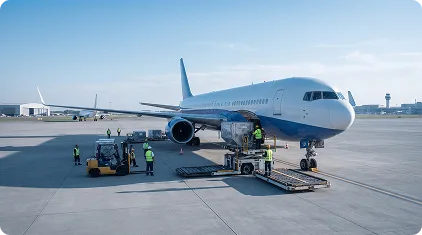
International air freight can be arranged on passenger or cargo aircraft when the shipment is accepted on every sector of the route, including transit points. Cargo Aircraft Only consignments are restricted to freighters. This may affect the choice of airline, departure frequency, route and freight cost.
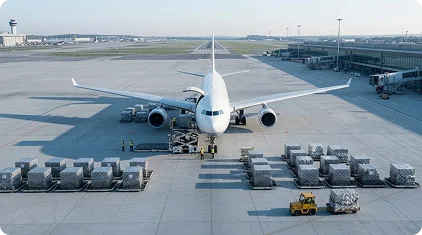
A cargo charter may be considered for large consignments, urgent departures or routes without suitable available capacity. The selected aircraft and airports must support the declared cargo and applicable DGR requirements.
Information Required for a DGR Quote
A general description such as chemicals, batteries or paint is not sufficient for route selection.
Please provide:

The SDS must correspond to the actual product and formulation being shipped. When the transport data is incomplete, the available documents can be reviewed to identify the missing information. The manufacturer or shipper remains responsible for the declared UN entry and supporting cargo data.
Packaging, Labelling and Documents
The package must correspond to the UN entry, packing group, quantity and applicable packing instruction. Ordinary commercial cartons, drums or containers are not automatically suitable for air transport.
The document package may include an Air Waybill, Shipper’s Declaration for Dangerous Goods, SDS, commercial invoice, packing list, permits and technical certificates. Package marks, labels and documents must contain consistent shipment data.
Where a DGD is required, it must be prepared by personnel with current dangerous goods training.
The service scope may also include pickup, terminal ground handling services, export or import customs clearance and final delivery.
Shipment preparation may include:
- UN specification packaging;
- approved inner and outer packaging;
- tested closures and absorbent materials;
- hazard labels and handling marks;
- UN number and proper shipping name;
- applicable CAO, battery and overpack markings.
Battery Air Freight
Battery consignments require information about the chemistry, configuration, Watt-hour rating, state of charge, condition and number of cells per package.
The request should include the SDS, UN 38.3 test summary and relevant technical data. State-of-charge limits may apply depending on the chemistry, configuration and applicable packing instruction.
Damaged, defective, recalled, prototype or waste units require separate assessment and may not be accepted for air transport.
Common entries include:
- UN 3480 and UN 3481 — lithium-ion batteries shipped separately, packed with or contained in equipment;
- UN 3090 and UN 3091 — lithium metal batteries shipped separately, packed with or contained in equipment;
- UN 3551 and UN 3552 — sodium-ion batteries shipped separately, packed with or contained in equipment.
What Affects the Cost

The main pricing factors are:
- UN entry, packing group and subsidiary hazard;
- net quantity and number of packages;
- actual and chargeable weight;
- package dimensions;
- passenger-aircraft or CAO restriction;
- direct, connecting or charter route;
- airline and terminal DGR charges;
- pickup, permits, customs procedures and final delivery.
Two shipments of the same weight may have different rates because their UN entries, quantity limits and aircraft restrictions differ. The final price is confirmed after the cargo data, route and service scope have been defined.
How the Shipment Is Arranged
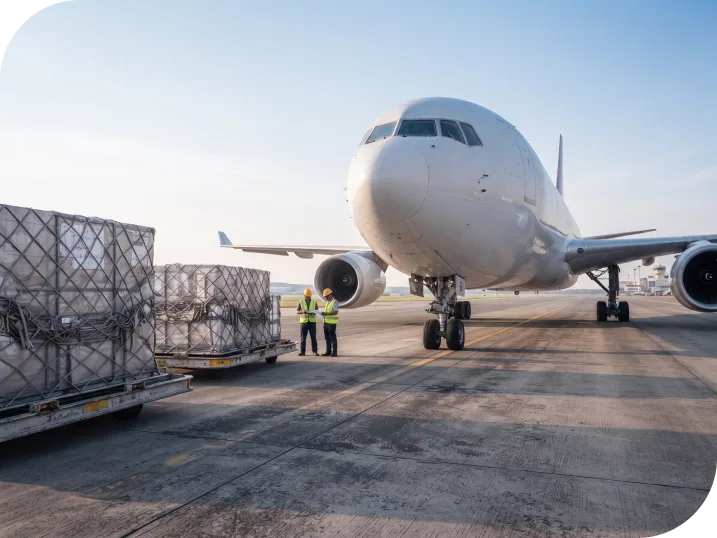
Request а Quote
Send the SDS, UN entry, package details, weight, origin and destination to receive a route proposal and quotation.
Frequently Asked Questions
Yes, when the items are compatible and the carrier permits the proposed package and loading configuration.
This depends on compatibility, segregation requirements, package marks and the packing instructions applicable to each entry.
Yes, when the temperature solution, refrigerant and packaging are compatible with the declared substance.
This depends on the UN entry, package configuration, compatibility with other cargo and the rules of the selected airline and transit terminals.
A new review may be required when the route, airline, quantity, packaging, product composition or applicable requirements have changed.
Contacts