
Automotive & Spare Parts
- Air freight solutions supporting automotive production and aftermarket supply chains
- Scheduled and charter capacity for urgent spare parts and production-critical cargo
- Global routing through DXB, DWC and AUH with connections to major automotive markets
- Flexible transport options for OEMs, Tier suppliers and automotive distributors
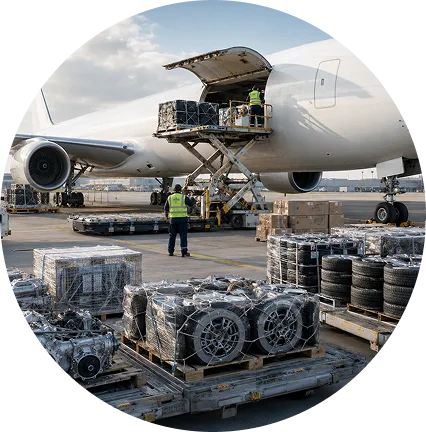
Why Automotive Supply Chains Use Air Freight

Air Freight for Automotive & Spare Parts
Automotive manufacturers, OEM suppliers and aftermarket distributors operate within tightly synchronized supply chains where shipment timing directly influences production, inventory and customer service. Air freight is frequently selected when replacement components, production parts or urgent stock replenishment cannot wait for longer transportation modes.
AC Global Services supports automotive cargo through scheduled airline services and dedicated charter solutions, connecting manufacturing locations, regional warehouses and destination markets across Europe, Asia, the Middle East and Africa.
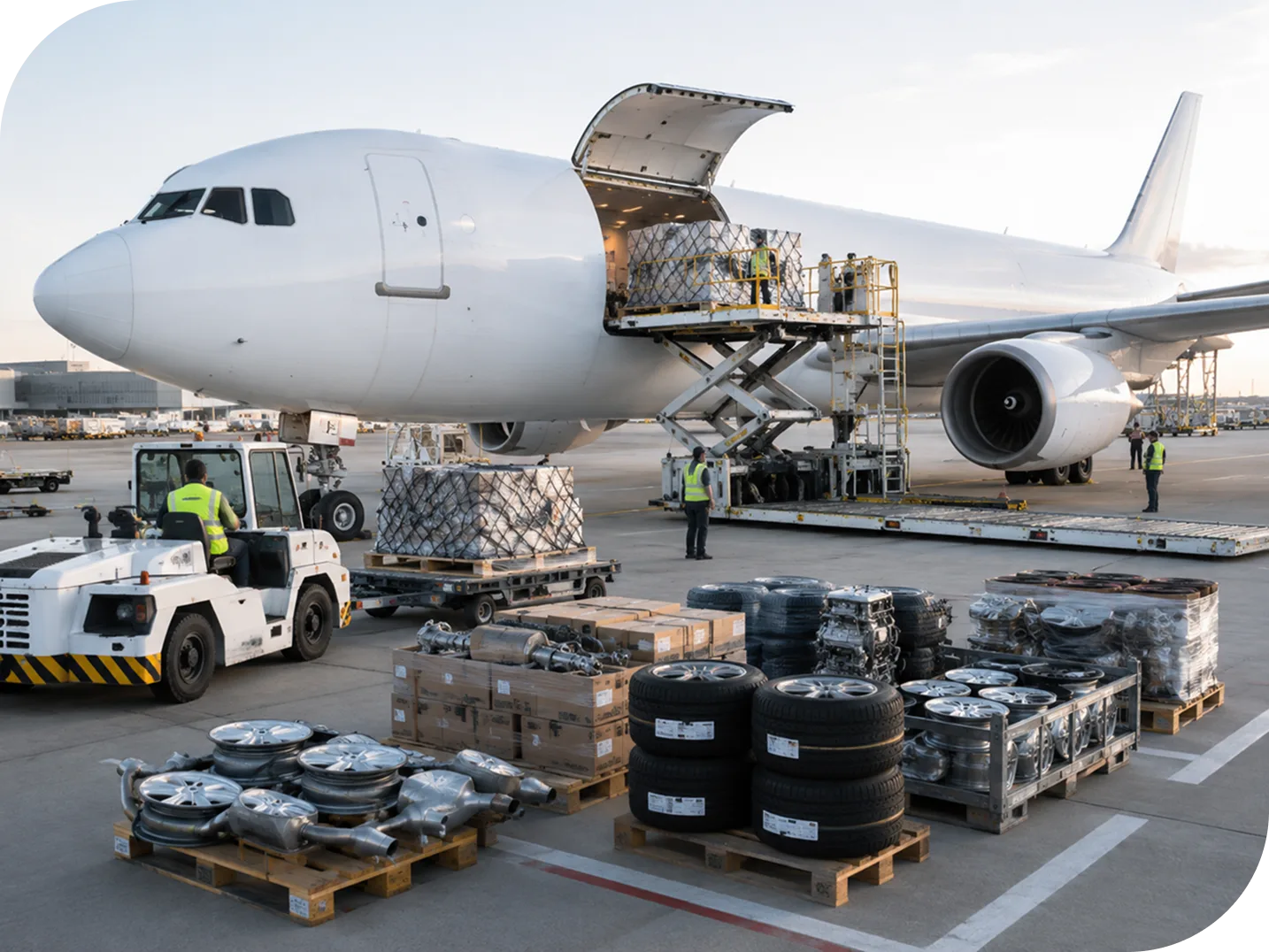
Cargo Profile
Typical cargo includes:





Transportation priorities often include:
- Production continuity
- Fast inventory replenishment
- Secure handling of electronic components
- Predictable transit schedules
- Rapid response to urgent shipment requests
Automotive Logistics Challenges
Automotive supply chains require continuous coordination between manufacturers, suppliers, distribution centres and service networks.
Air freight is commonly used to:
- Prevent production interruptions
- Replenish warehouse inventory
- Deliver urgent service parts
- Support prototype and pre-production shipments
- Move high-priority supplier cargo
- Respond to unexpected supply chain disruptions
Transport planning is based on delivery priorities, shipment profile and destination requirements.
Why UAE Hubs Support Automotive Logistics
DXB, DWC and AUH provide efficient connections between automotive manufacturing regions and destination markets worldwide.
These hubs support both scheduled freight and dedicated charter operations, allowing automotive cargo to move through well-connected international airline networks.
Frequently used onward gateways include:
- Frankfurt (FRA)
- Leipzig (LEJ)
- Amsterdam (AMS)
- Brussels (BRU)
- Liège (LGG)
- Riyadh (RUH)

Recommended Services
Depending on operational priorities, customers may combine:
Service selection is determined by shipment urgency, cargo characteristics and destination requirements.
Aircraft & Cargo Planning
Automotive cargo ranges from compact electronic modules to heavy mechanical assemblies.
Common aircraft options include:
- Boeing 777 Freighter (B777F)
- Boeing 747 Freighter (B747F)
- Airbus A330 Freighter (A330F)
Shipment planning considers cargo dimensions, weight distribution, loading configuration and airline acceptance criteria. Oversized automotive equipment may require dedicated charter aircraft or specialized loading procedures.
Industry Example
A Tier 1 automotive supplier required emergency transportation of production components from Southeast Asia to Germany following an unexpected disruption in the regular supply chain.
Cargo was routed through DWC with onward air freight to Frankfurt (FRA), allowing manufacturing operations to resume without extended production delays.
- Cargo: Production components
- Weight: 9,800 kg
- Transit Time: 68 hours
- Destination: Germany
FAQ
Air freight is commonly selected for production-critical components, urgent spare parts, prototype shipments and inventory replenishment where delivery speed is essential.
This depends on packaging standards, cargo compatibility and airline handling requirements. Each shipment is reviewed before booking.
Pricing is typically based on chargeable weight, shipment dimensions, origin, destination, service level and cargo characteristics.
Yes. Charter aircraft are frequently used for production recovery, oversized components and shipments that require dedicated departure schedules.
Dimensions, weight, commodity description, origin, destination and required delivery timeline are typically needed before a quotation can be prepared.
Contacts