
Transportation of Industrial Equipment
Moving industrial equipment requires careful planning, specialized handling, and coordinated logistics from start to finish. The dimensions, weight, loading requirements, and delivery schedule all need to be considered before transportation begins.
No Two Shipments Are the Same
Industrial cargo can include:
- manufacturing machinery
- construction equipment
- generators and transformers
- production line components
- oil & gas equipment
Each shipment has its own transportation and handling requirements depending on the characteristics of the equipment, destination, and operational conditions.
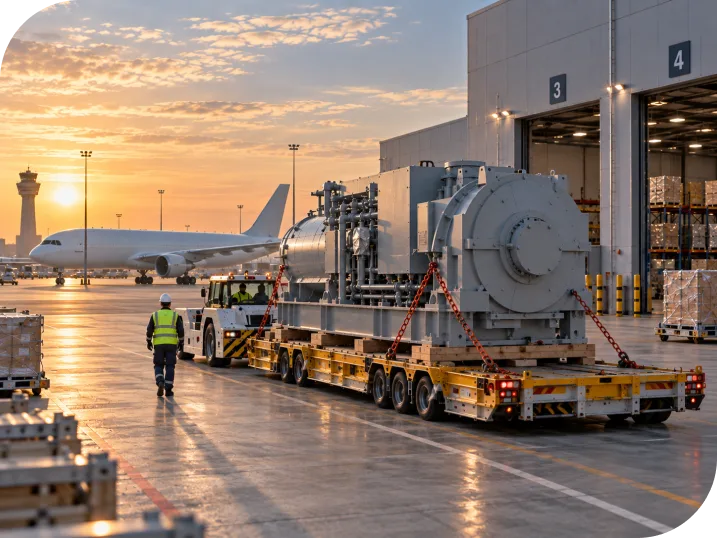
Preparation Is Critical
Before transport begins, it is important to assess:

Accurate information at the planning stage helps determine suitable transport options and avoid unnecessary delays or operational challenges later in the process.
Heavy Cargo Needs Careful Handling
Industrial equipment may require:
- special loading equipment
- customized securing solutions
- oversized cargo procedures
- coordinated ground handling
The handling approach needs to reflect the size, weight, and specific characteristics of the equipment throughout the transportation process.
Delays Can Impact Operations
Industrial equipment is often directly linked to:
- manufacturing schedules
- construction projects
- maintenance shutdowns
- production deadlines
A delay in transportation can therefore affect more than the shipment itself. Efficient planning and coordination help keep projects and operations moving according to schedule.
Industrial Cargo Requires Experience and Coordination
Successful transportation depends on careful planning, clear communication, and an understanding of the specific requirements of each shipment.
We work closely with clients and logistics partners to coordinate industrial equipment movements and identify transport solutions based on cargo specifications, timing, handling requirements, and destination.
Planning an industrial equipment shipment? Let’s discuss the right approach.